The Cognitive Digital Twin: How AI and IoT Are Revolutionizing Industrial Operations and Predictive Maintenance
A deep technical analysis of how the convergence of neural networks, real-time IoT sensors, and high-fidelity virtual twins is transforming factory floors, supply chains, and asset lifecycle management.
Beyond 3D Models: The Era of Active Feedback Loops
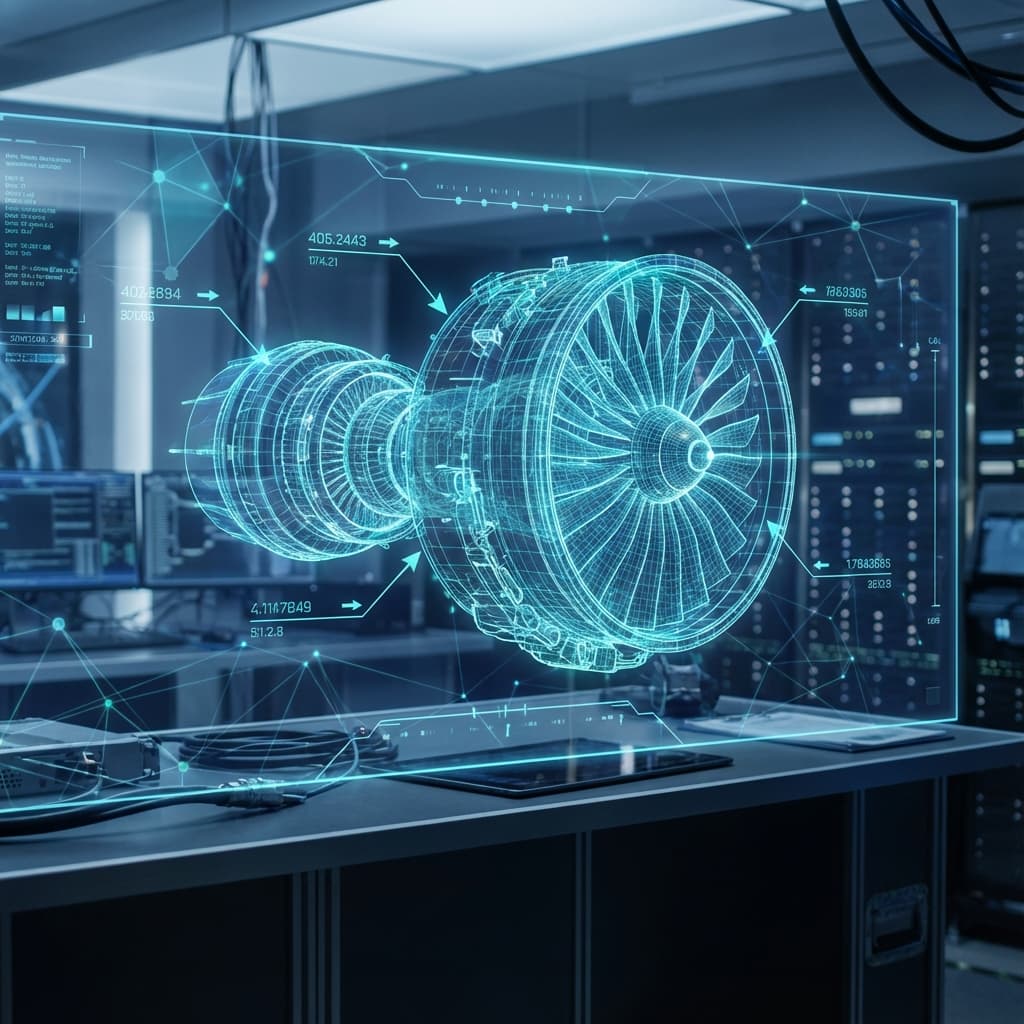
For years, computer-aided design (CAD) models served as static representations of machinery, locked in design files and detached from reality. When a machine was installed, its physical wear, temperature fluctuations, and environmental stressors were invisible to software. Today, the convergence of high-density IoT sensor arrays and cognitive artificial intelligence has birthed the Cognitive Digital Twin.
Unlike traditional digital twins that simply mirror geometry, a cognitive twin is a dynamic, living software replica of a physical asset. It constantly ingests telemetry data—vibration, thermography, electromagnetic fields, fluid pressures, and acoustic signatures—processing these inputs through edge-deployed AI models to track structural integrity, simulate wear patterns, and forecast mechanical failures before they happen.
Predictive Failure Mitigation: The P-F Curve Shift
The core business value of AI-driven digital twins lies in shifting the detection window of equipment failure. In reliability engineering, the P-F (Potential to Functional Failure) Curve measures the interval between when a potential failure becomes detectable and when the asset ceases to function.
Traditional maintenance systems rely on visual checks or simple threshold alarms, which catch failures only days or hours before breakdown. AI-driven twins run sensor fusion algorithms (combining acoustic, thermal, and electrical telemetry) to detect microscopic anomalies weeks or months in advance, providing ample time for planned maintenance during scheduled shutdowns.
The P-F Curve: AI vs. Traditional Detection
Timeline comparison of failure warning indicators
High-Speed Sensor Fusion & Edge Inference
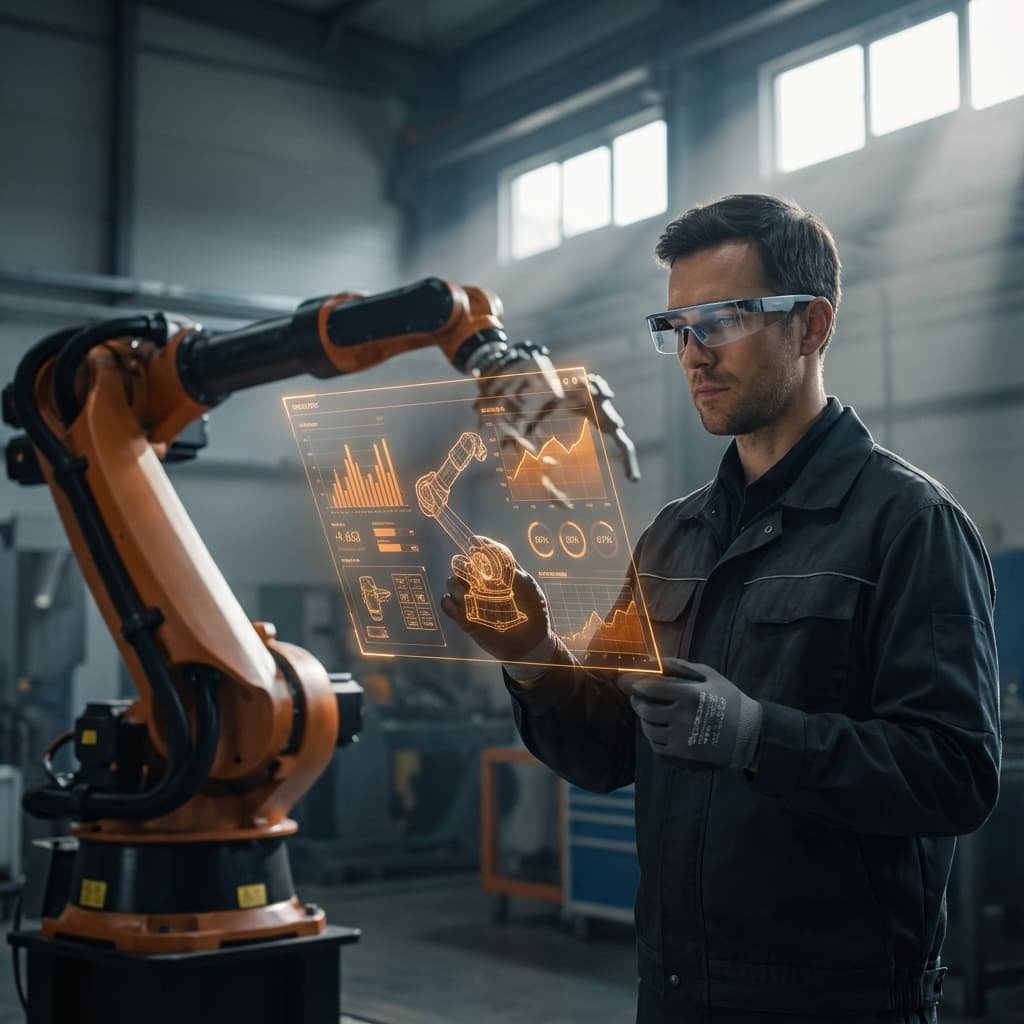
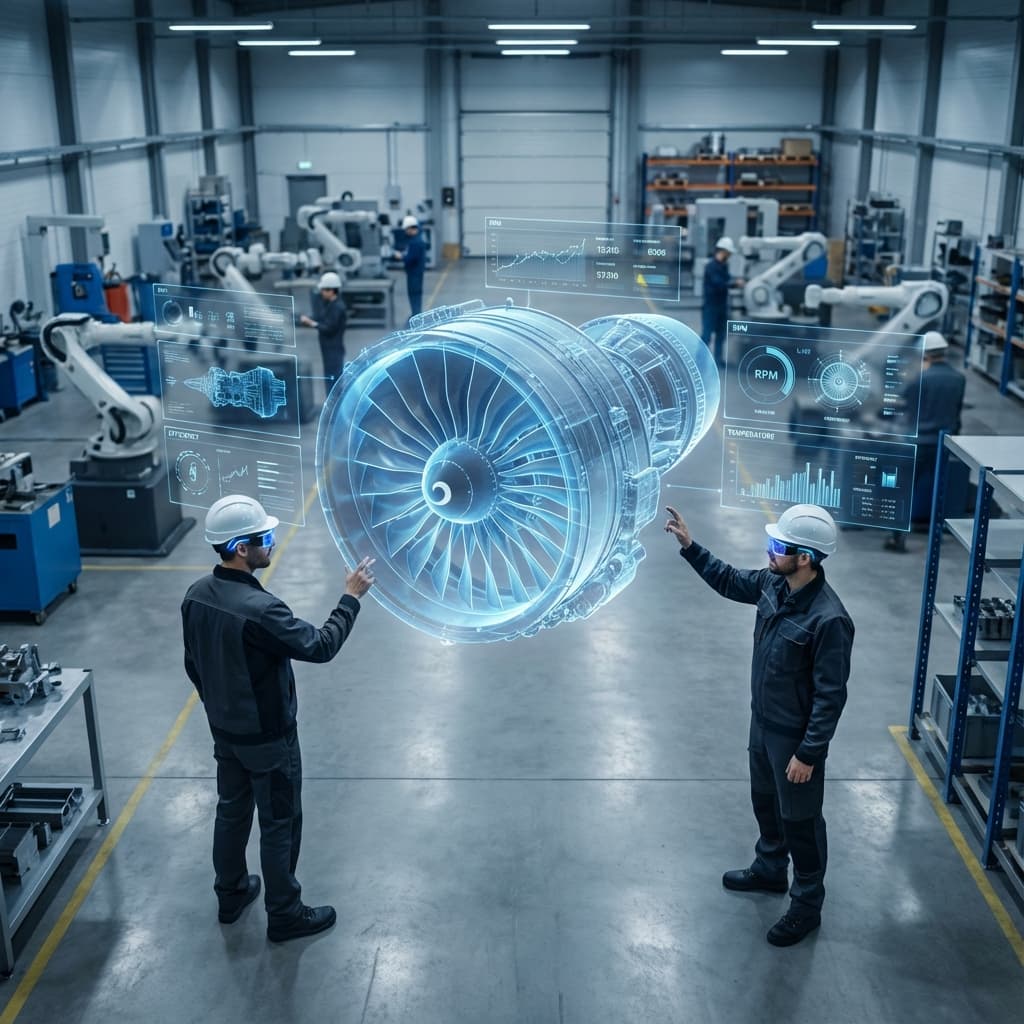
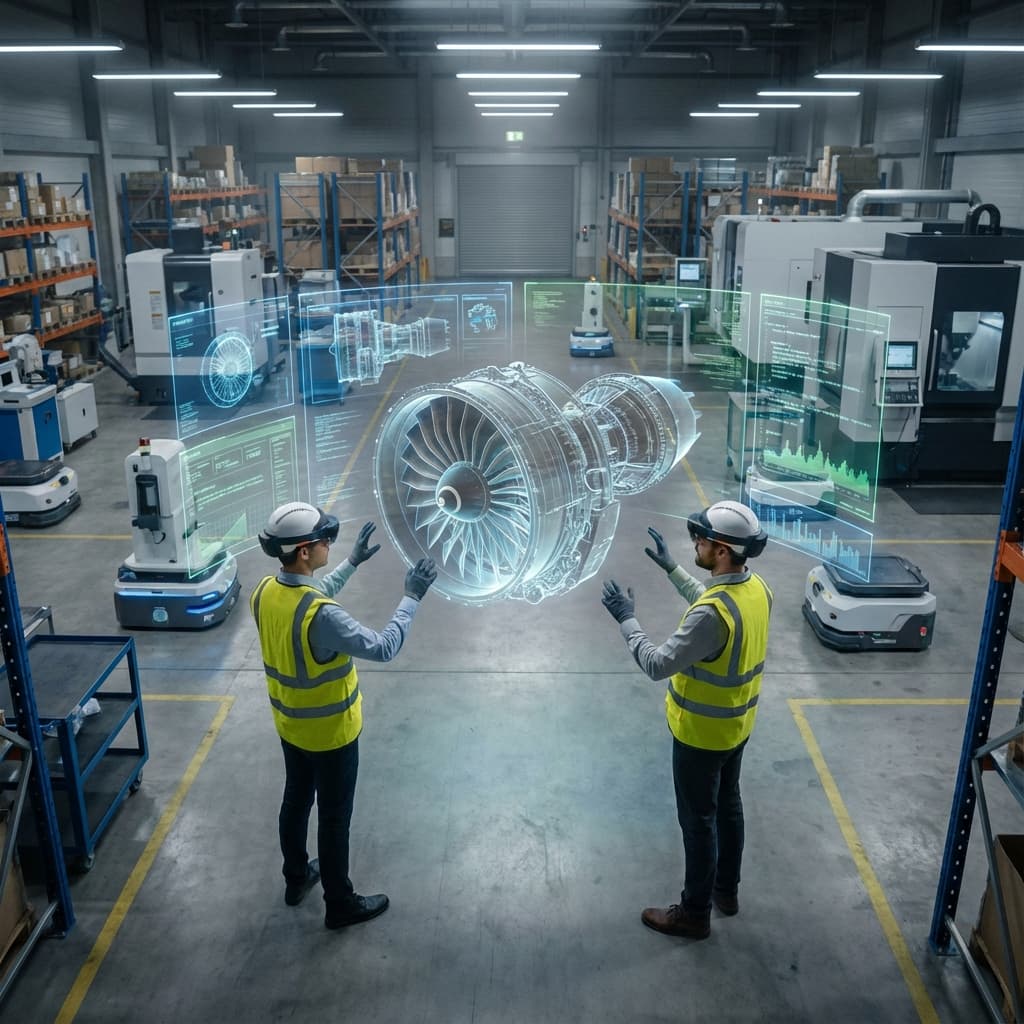
At the center of the cognitive loop is the physical-to-virtual connection. Modern manufacturing facilities leverage sensor fusion to synthesize signals from heterogeneous arrays into a singular unified machine-health metric.
Rather than sending raw gigabytes of high-frequency vibration data to the cloud, local edge nodes perform fast-Fourier transforms (FFT) and run optimized convolutional neural networks. Only identified feature anomalies and state changes are streamed to the digital twin, minimizing bandwidth costs and ensuring sub-second response times for safety shutoffs.
Systemic Advantages of Cognitive Industrial Infrastructure
Unplanned Downtime Reduction
By predicting component stress and lifecycle decay, companies reduce unplanned asset shutdowns by up to 47%. Repair teams arrive with the exact replacement components and tools, converting chaotic emergency fixes into routine, predictable maintenance windows.
Energy & Resource Optimization
Digital twins do not merely monitor for breaks; they run real-time simulations to find the most efficient operational speeds, feed rates, and cooling parameters. Micro-adjustments applied directly to CNC machines and robotic cells lower net power consumption by up to 12%.
Towards the Autonomous Cyber-Physical Loop
The ultimate destination of industrial digital twins is not human-in-the-loop dashboarding, but fully closed autonomous control. In these architectures, the virtual twin detects an efficiency dip or early component wear, calculates the optimal corrective action, and automatically pushes modified control logic back to the physical PLC (Programmable Logic Controller).
As AI chips become cheaper and IoT security standards (like OPC UA) mature, this bi-directional, self-healing loop will become standard across chemical processing plants, automotive lines, and energy grids worldwide. At Kitebe, we build the digital infrastructure and interface layers that connect operators with these complex, high-reliability cyber-physical systems.